 |
 |
|

 |
|
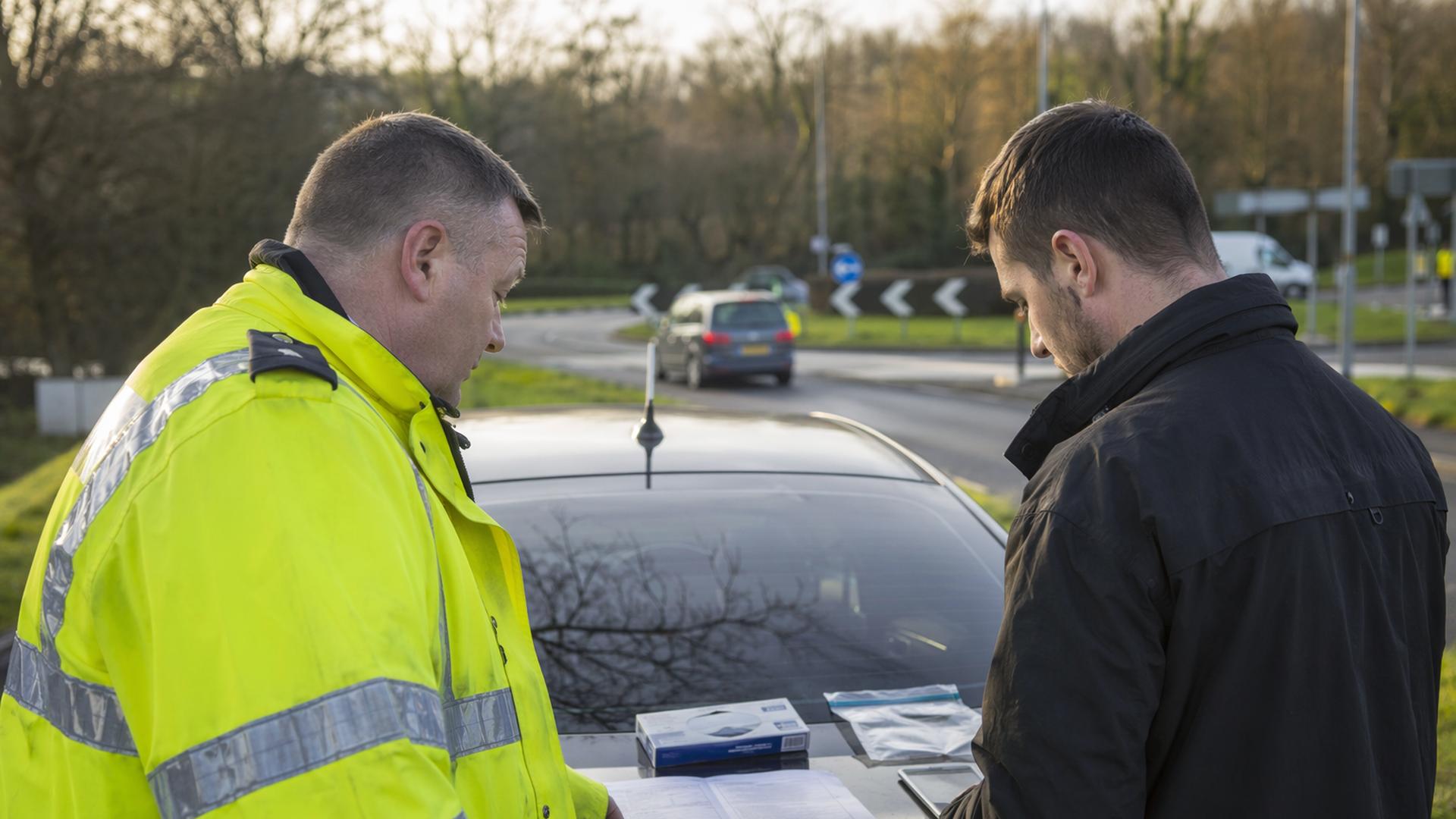 7 Things That Follow a Positive Drug Test at the Roadside in the UKPublished by Drug Driving Solicitors, specialist defence lawyers for drug driving charges across England and Wales. Failing a roadside drug test is a deeply unsettling experience, and for most people, it marks the beginning of a process they know very little about. The steps that follow are governed by a precise legal framework, and understanding what lies ahead can make a significant difference to how you respond, what decisions you make, and what outcome you ultimately achieve. This article sets out the seven key stages that typically unfold after a positive roadside reading, explained clearly and without unnecessary complexity. Whether the drug involved was a controlled substance or a prescription medication, the procedure that follows a positive test is broadly the same across England and Wales. Each stage carries its own legal significance, its own rights, and its own potential pitfalls. Reading this article will not replace specialist legal advice, but it will give you a clear picture of the journey from roadside to resolution, and help you understand why taking early advice from a drug driving solicitor is one of the most important steps you can take. 1. A Healthcare Professional Obtains a Blood SampleOnce a driver has been taken into custody following a positive roadside reading, the next critical step in the evidentiary process is the collection of a blood sample. Unlike the initial roadside swab, which is a screening tool only, the blood sample is the evidence on which a prosecution will ultimately rely. It is this sample, and the laboratory results it produces, that will determine whether a charge is brought and, if so, what the charge will be. The blood sample is not taken by the custody officer or the arresting officer. It must be obtained by a healthcare professional, typically a forensic physician or a registered nurse with appropriate authorisations, who attends the custody suite for this purpose. This is a legal requirement, not an administrative convenience, and any deviation from it can have significant consequences for the admissibility of the evidence gathered. The driver is entitled to retain a portion of the sample for independent analysis. This is a right that is too often overlooked in the stress of custody, but it is one that can be extremely valuable. An independent expert analysis of the defendant's portion can challenge the accuracy of the prosecution's laboratory findings or provide supporting evidence for a statutory medical defence. The entire blood-taking process is subject to strict procedural requirements, and any failure to comply with those requirements, whether in the way consent is obtained, the equipment used, or the manner in which the sample is divided and stored, can give rise to a challenge at a later stage. A specialist solicitor will scrutinise every aspect of this procedure as a matter of routine. Why a Registered Healthcare Professional Must Administer the Test
The Defendant's Right to a Portion of the Sample
Procedural Safeguards at the Blood-Taking Stage
2. The Roadside Screening Device Returns a Positive ReadingThe moment that sets the entire process in motion is the positive reading produced by a roadside drug screening device. These devices, commonly known as drugalyser units, are used by police officers at the roadside to screen drivers for the presence of certain controlled drugs. A positive reading does not establish guilt, but it does provide the officer with the grounds to take further action, including arrest. Only devices that have received type approval from the Home Secretary are lawfully permitted to be used for roadside drug screening. Type approval is granted on a drug-by-drug basis, which means that a device approved for detecting cannabis is not necessarily approved for detecting cocaine or any other substance. This is not a technicality to be dismissed; it is a legal requirement, and using a non-approved device, or using an approved device for a drug it is not approved to detect, can fundamentally undermine the lawfulness of what follows. A positive reading from a screening device is not, by itself, evidence of a drug driving offence. It is a trigger for the next steps in the investigation. The device is designed to indicate the possible presence of a drug, not to measure a precise concentration. The actual evidential threshold is determined by laboratory analysis of a blood sample taken later in the process. Understanding this distinction is important because it means that a positive roadside reading does not automatically translate into a conviction. Drivers should also be aware that certain over-the-counter medications and prescribed drugs can produce positive readings on screening devices. If a positive reading is the result of a legitimately prescribed medication, this may form the basis of a statutory medical defence, but only if that defence is properly evidenced and presented. Early legal advice is essential in these circumstances. How Type-Approved Drug Screening Devices Operate
The Drugs That Current Roadside Devices Are Approved to Detect
What a Positive Roadside Reading Does and Does Not Mean
3. The Matter Is Listed Before the Magistrates' CourtIf the evidence gathered during the investigation supports a charge of drug driving, the case will be heard in the magistrates' court. Drug driving offences under Section 5A of the Road Traffic Act 1988 are summary-only offences, which means they are dealt with entirely within the magistrates' court and cannot be sent to the Crown Court for trial, except in exceptional circumstances involving related indictable offences. The first hearing at the magistrates' court is known as the first appearance or preliminary hearing. At this stage, the defendant is asked to confirm their personal details, and the charges are read out. A plea of guilty or not guilty is entered. Where a not-guilty plea is entered, the court will set a date for a trial and make directions for the service of evidence by both the prosecution and the defence. Where a guilty plea is entered, the case may proceed to sentencing at the same hearing or be adjourned for a pre-sentence report. The sentencing powers available to the magistrates in drug driving cases are well established. A first-time conviction carries a mandatory minimum disqualification of 12 months, and the court may also impose an unlimited fine, up to six months' imprisonment, and a community order. The actual sentence will depend on the specific circumstances of the case, including the level of the drug found in the blood, the manner of driving, and any aggravating or mitigating factors presented to the court. Defendants who attend court without legal representation often find themselves at a significant disadvantage. A specialist solicitor can review the prosecution evidence before the hearing, identify any weaknesses or procedural irregularities, advise on the strength of any available defences, and present mitigation effectively. Even where a conviction is likely, the difference between effective and ineffective representation can be substantial in terms of the sentence imposed. The Role of the Magistrates' Court in Drug Driving Cases
What Happens at the First Hearing
Sentencing Outcomes and Their Consequences
4. The Officer Issues a Statutory WarningBefore requiring a driver to provide a specimen at the roadside, the officer is under a legal obligation to administer what is known as a statutory warning. This warning informs the driver that a failure to provide a specimen, without a reasonable excuse, is itself a criminal offence. The warning is not a matter of good practice or police courtesy; it is a legal requirement, and its absence or inaccuracy can have serious consequences for the admissibility of any evidence gathered thereafter. The statutory warning must be given in clear and understandable terms. Officers are trained to deliver it using a prescribed form of words, and any significant departure from that wording may render the subsequent requirement to provide a specimen unlawful. This is not a loophole or technicality exploited by unscrupulous lawyers; it is a fundamental protection for citizens who are being required, under legal compulsion, to provide evidence against themselves. In practice, errors in the administration of the statutory warning are not uncommon. Officers may be dealing with a difficult roadside environment, they may be unfamiliar with certain aspects of the procedure, or they may simply make a mistake in the sequence of steps required. A specialist solicitor will always obtain and review the full body-worn video footage and any other contemporaneous records to establish precisely what was said, when it was said, and whether the correct procedure was followed at every stage. The statutory warning stage is one of the most frequently examined aspects of a drug driving case by experienced defence lawyers. A failure to administer the warning correctly, or to administer it at all, does not automatically result in the charge being dropped, but it is a powerful tool in the hands of a properly instructed solicitor. The courts have held on numerous occasions that procedural failures at this stage can be fatal to the prosecution case. The Legal Basis for the Statutory Warning Requirement
What the Warning Must Communicate to the Driver
Why Defence Lawyers Focus Closely on This Stage
5. You Are Arrested and Taken to a Custody SuiteFollowing a positive roadside screening result and, where applicable, the administration of the statutory warning, the officer will arrest the driver under Section 6D of the Road Traffic Act 1988. The arrest is a formal legal step, and the officer must explain the grounds for the arrest and use the correct form of words. The driver is then transported to a designated custody suite, which is typically located at a police station. Arrival at the custody suite marks the beginning of the formal detention process. The custody sergeant, who is an independent officer with responsibility for the welfare and rights of detained persons, books the driver in and records the reason for their detention. The driver is informed of their rights, including the right to have someone informed of their arrest, the right to free and independent legal advice, and the right to consult a copy of the Codes of Practice. These rights are not optional; they are fundamental protections under the Police and Criminal Evidence Act 1984. The right to free legal advice in custody is one of the most important rights available to a detained person, and it is one that is too frequently declined. Speaking to a solicitor before agreeing to provide any specimen or making any statement can significantly affect the outcome of the case. The solicitor can advise on the driver's rights and obligations, explain what the procedure involves, and ensure that any irregularities in the process are identified and recorded at the earliest possible stage. The custody record is a contemporaneous, official log of everything that happens during the period of detention. It records the time of arrival, the rights given, the specimens requested and provided, any medical issues noted, and the times at which the driver was released or charged. This document becomes an important piece of evidence in any subsequent legal proceedings, and a specialist solicitor will always request a copy as part of the case review. What Happens During the Arrest at the Roadside
Rights Available to a Driver in Custody
The Importance of the Custody Record
6. The Blood Sample Is Forwarded for Laboratory AnalysisAfter the blood sample has been taken and divided, the officer's portion is packaged, sealed, and sent to a forensic laboratory nominated by the relevant police force. It is at this laboratory that the definitive analysis is carried out, establishing whether the concentration of any controlled drug found in the blood exceeds the statutory specified limit set out in the Drug Driving (Specified Limits) (England and Wales) Regulations 2014. The laboratory analysis is a highly technical process. Toxicologists use validated analytical methods, typically liquid chromatography-tandem mass spectrometry, to identify and quantify any controlled drugs or their metabolites present in the sample. The results are presented in a formal toxicology report, which sets out the concentration of each drug detected, the analytical method used, and the laboratory's conclusions. This report is a central piece of prosecution evidence and is typically served on the defence as part of the disclosure process. The time it takes for the laboratory report to be produced is one of the main reasons why drug driving cases take several months to resolve from the date of the incident. Laboratory workloads vary, and the nominated laboratory's capacity at the time the sample is received will have a significant bearing on how long the process takes. Drivers who are waiting for a charging decision should not interpret a lengthy silence from the police as an indication that no further action will be taken; it often simply reflects the time taken to complete the analytical process. The laboratory report is not beyond challenge. Expert toxicologists instructed on behalf of the defence can review the methodology used, examine the instrument calibration records, consider whether any contamination or degradation of the sample may have affected the result, and, where the defendant has preserved their portion of the blood sample, conduct an independent analysis. Where a discrepancy exists between the prosecution's result and the defence's independent result, this can be a powerful factor at trial. The Chain of Custody and Why It Matters
What the Laboratory Is Testing For
How the Toxicology Report Is Used in Proceedings
7. You Are Charged or Informed That No Further Action Will Be TakenOnce the laboratory report has been received and reviewed, the investigating officer, in consultation with the Crown Prosecution Service where appropriate, will make a charging decision. This is the point at which the driver is either formally charged with a drug driving offence, or informed that no further action will be taken. It is a pivotal moment in the process, and the decision reached here determines whether the matter proceeds to court. The charging threshold is set out in the Code for Crown Prosecutors. A charge will only be brought if there is sufficient evidence to provide a realistic prospect of conviction, and if a prosecution is in the public interest. In drug driving cases, the first limb of this test is usually straightforward where the laboratory results show a concentration above the specified limit; the evidential picture is relatively clear. However, if there are procedural irregularities, questions about the integrity of the sample, or a viable medical defence, the realistic prospect of conviction may be less certain, and the decision to charge may be reconsidered. Where the decision is to take no further action, the driver will be notified, usually in writing, that the investigation has been concluded without charge. The arrest will still appear on the Police National Computer, but no criminal proceedings will follow. It is worth understanding, however, that this outcome is not the same as an acquittal; it is a decision by the prosecution that the evidential or public interest threshold has not been met at that time. Where a charge is brought, the driver will be required to attend court, either by being formally charged at the police station and given bail to appear at the magistrates' court, or by receiving a postal requisition requiring attendance on a specified date. From this point, the case moves into the court process, and legal representation becomes even more important. A specialist solicitor will advise on whether to contest the charge, what defences may be available, and how best to present the case, whether at trial or in mitigation. The Charging Decision and the Code for Crown Prosecutors
What Happens When a Charge Is Brought
Understanding a No-Further-Action Decision
What Lies Ahead and Why Early Advice MattersThe seven stages described in this article form a process that, while legally structured and procedurally defined, is capable of being navigated far more effectively with early specialist advice. From the moment of the positive roadside reading to the final resolution of the case, there are multiple points at which the course of events can be influenced by informed, timely intervention. Drug driving cases are not straightforward, and the apparent simplicity of a blood test result above a specified limit often conceals a range of issues that a specialist solicitor is trained to identify and address. Frequently Asked QuestionsWhat is a DG10, and how long does it remain on a driving licence? DG10 is the DVLA offence code applied when a driver is convicted of driving or attempting to drive with a controlled drug above the specified limit, the standard Section 5A offence. Once recorded, it remains on the driving licence for 11 years from the date of conviction and is visible to insurers who access the DVLA database. Insurance premiums tend to increase substantially after a DG10 conviction. A specialist solicitor can advise on the wider implications of a DG10 for employment, international travel, and other areas of life that are specific to the individual's circumstances. What are the most common reasons drug driving charges are dropped or do not proceed to conviction? Charges are most frequently undermined by: failure to administer the statutory warning correctly before the roadside swab was required; use of a screening device that did not have type approval for the specific drug detected; problems with the chain of custody of the blood sample; failure to offer the defendant their portion of the divided sample; errors in the laboratory analysis process; and unlawful stop and search at the outset. A specialist solicitor will examine all of these issues as a matter of course, not just the headline toxicology result, and will identify any that can be pursued as part of the defence. What is the difference between being released under investigation and being bailed after a drug driving arrest? When a driver is released under investigation, they leave custody without bail conditions and with no fixed date by which the police must make a decision. The investigation continues, but there is no formal court date set. Release on bail, by contrast, may come with conditions, including possible restrictions on driving, and may include a date on which the driver is required to return to the police station. Both outcomes mean the investigation is ongoing. If you have been released under investigation and have not heard anything for several months, it is worth seeking legal advice on your position, as there is no automatic time limit on how long a pre-charge investigation can continue. What if the drug identified in my blood was lawfully prescribed by my doctor? A statutory medical defence is available under Section 5A(3) of the Road Traffic Act 1988. To rely on it, the driver must demonstrate that the drug was prescribed or supplied to them by a healthcare professional, that it was taken in accordance with the relevant medical advice, and that their driving was not impaired at the time. The defence is narrower in practice than many people assume: it requires proper evidential support, including medical records and, in some cases, expert toxicological evidence. Drug Driving Solicitors has specific expertise in cases involving prescription medication, and early advice in these cases is particularly important. What happens if a driver refuses to provide a blood sample at the custody suite? Refusing to provide a specimen without a reasonable excuse is a separate criminal offence under Section 7A of the Road Traffic Act 1988, and it carries the same penalties as a drug driving conviction, including the mandatory 12-month disqualification. The courts interpret reasonable excuse very narrowly, and a medical reason will only be accepted if it is properly supported by evidence. Refusing on the basis that the roadside swab was wrong, or out of a general unwillingness to cooperate, will not constitute a reasonable excuse. No driver should refuse to provide a specimen without first speaking to a solicitor. How long does the process typically take from a positive roadside test to a charging decision? The process generally takes between two and six months, though in some cases it can take longer. The most significant source of delay is the laboratory analysis of the blood sample, which depends on the capacity of the force's nominated laboratory at the time the sample is received. Once the toxicology report is available, the charging decision is usually made relatively promptly. If six months have passed since the incident and no decision has been communicated, it is advisable to seek specialist legal advice on the current status of the investigation and the options available. Drug Driving Solicitors is a specialist law firm representing drivers facing drug driving charges throughout England and Wales. If you have received a positive roadside drug test result and want to understand where you stand, contact the firm for a free initial consultation or visit drugdrivingsolicitors.co.uk. Seeking early advice carries no cost, and in many cases, it can make a decisive difference to how your case is resolved. |
|















 |
|
 |
